Thursday, April 4, 2013

Herculaneum: 11 March 2013

The year was 79 AD, the place, Mt. Vesuvius and environs, the upscale playing grounds of wealthy Roman citizens. The mountain had been grumbling for years – earthquakes and tremors – but no one gave it any thought until … the top of the mountain lit up in fire. Ash rained down from the sky, covering the surroundings at the rate of a meter every few hours. Then came pyroclastic lava, burying everything in its path as it made its way to the sea and reshaped the coastline. That path included the cities of Pompeii, Stabiae, Boscoreal, Oplontis and Herculaneum.

Amy and I visited the ruins of Pompeii many years ago on our first trip together to Italy in 1996. It was a less than stellar visit and left an unpleasant taste in my mouth. It was crowded, dirty and large portions of it were not open to the public. Apparently, the intervening years haven’t been kind as the site slowly decays with the Italian government unable to provide the necessary funding to preserve and protect the remains.

That brings us to Herculaneum. For many years this site was accessible only to scholars. Now, through a unique private-public partnership this UNESCO World Heritage Site can be viewed by all. Early March is a good time to visit. The weather is mild but the site is free of the throngs that visit during the high season. Approximately 1/10 of the area has been unearthed although more exploration has been done using tunnels.


Herculaneum is more intact as it was buried by the lava flow from the ground up, allowing the upper stories of houses to be preserved as well. In Pompeii the upper stories were destroyed by the rocks falling from the sky. You can walk the streets just as the Romans might have some 2000 years ago.


Scholars have even gone so far as to replant the gardens using the same varieties of plants in the same configuration that archeological work indicates was present at the time of the disaster.


The intense heat of the lava carbonized wooden beams and objects, turning them into charcoal.


There are even remains of a wooden staircase.


There are brightly painted inner courtyards


and the remains of decorative frescoes,


seen here in detail.


There is some evidence that the color palate we currently see was not the original as the heat of the lava might have altered and changed some of the pigments just as pottery glaze changes when fired at high temperature in a kiln. These three paintings sit above a tiled alcove which might have contained a fountain.


Several magnificent mosaic wall tiled areas can be seen.


Both of these pictures are in the same courtyard.


Tile can also be seen intact or restored on floors


and in this interior fountain.


Such fountains were used for air circulation as well as decoration since in the summer the cold, moving water would have promoted cooling, convective currents. There were several bathing complexes including one with these remarkable tiled floors.


Pompeii and Herculaneum offers different experiences. For that matter, Ostia Antica provides a nice opportunity to see the remains and layout of an ancient Roman city, and it is much more accessible from Rome. If you have time to see them all, by all means do. However, if there can be only one, then Herculaneum is your best choice.

Tuesday, April 2, 2013

Granada/Alhambra: 27 March 2013

As soon as we booked our timeshare in Costa del Sol, Amy was online looking for things to do. She quickly noted how close Marbella was to Granada and it was immediately clear that we were headed there to see the Alhambra. When we arrived in Marbella and got a sense of the options, she immediately went online to try to get tickets only to discover that general admission tickets were all sold out. Tickets through the resort were over the top expensive so it looked like we were out of luck until Amy noted a group of guided tours. The cost was significantly more than a general ticket, but significantly less than the offer from the resort so we agreed to go for it and signed up for an English language tour focusing on Women in the Alhambra. The tour began at 0930 and we were required to pick up our tickets an hour ahead of time at the Ticketmaster machine. The drive from Marbella to Granada is almost 2 hours and we left a few minutes for getting lost which made for a very early start to the day.

As it turned out, the decision to go on a tour was a fantastic one! We effectively got a backstage pass with our own security guard who followed us around and let us into places where visitors are not normally allowed. It also included a trip into the city of Granada to see some of the sites there. Unfortunately, some of those, like the convent, were closed due to Holy Week activities and others were unavailable, like the cathedral due to a mass being said. There were only 5 people on our tour, although the guide said there could have been a maximum of 30. The weather for our visit was fickle, to say the least. We started in bright sunshine and warmth, but at one time later on were being buffeted by rain swept gusts of chilled air.

The Alhambra was actually more than a single palace although most of what was originally there has been destroyed either by the Christians who later occupied it or by the Muslims themselves in a fit of pique when they were kicked out. I took several hundred pictures; far too many to include them all here with any kind of coherent description. So, I will include some of the nicer ones with brief descriptions of what they are. As you enter the complex you see the summer house of the sultans sitting outside the fortified complex.

It was situated in such a way as to provide maximum pleasantness, but the sultan had to return inside the walls at night which he did along a private road with its own entrance.


We visited the Palace of the 3 Princesses, not normally on view.


Legend has it that two of the three young ladies left through a window to be with their Christian lovers leaving the third behind.


This would have been made possible by the fact that the small, square building is built into the fortified wall.


A stroll through the remains of a palace site uncovered evidence of a Roman-style toilet with running water.


Our guide arranged for us to visit the Hall of the Ambassadors, even though it wasn’t on our tour.


Everywhere you look is decorated with writing or geometric designs, all of it was originally painted and some still has original pigmentation.


We had a chance to visit the Court of the Lions and its fabulous fountain which had just been reinstalled last week following restoration.


The base is so large that it won’t fit through any of the entrances indicating that it was placed before the palace was finished around it.


There were the remains of marvelous geometric tile work.


Another unique place we visited was the upstairs private quarters of the family.


While the decoration was more functional and less ornate, it was still obviously the home of wealthy people.

There were any number of stunning gardens and open spaces.


Rather than have windows facing outward, they always looked into these interior courtyard spaces.


Another interesting place off the tourist path was a tower decorated for Charles V as he made his way across Europe and decided to build a new palace on the site of his former foe at Alhambra. The interior is decorated with a series of frescoes depicting portions of his travels.


The tower can be seen to the far right of the picture taken from the town below where we lunched on tapas.


As part of our visit to the town, we stopped at a hamam.
   

After having seen so much of the Roman, gothic, baroque, etc. styles of architecture the sites at the Alhambra were quite noteworthy and different. Even though the Muslims were present in places such as Sicily, little of their work remains. I was impressed by how light and spacious everything seemed, not at all heavy or oppressive. Imposing wasn’t the intention. Some of that was made possible by their work with plaster rather than carving stone. This allowed them to cover every surface with detail and color.

Overall, we enjoyed the trip immensely and returned to the resort tired, but satisfied.

Monday, April 1, 2013

Ronda: 26 March 2013

Another place close by to Marbella is the city of Ronda. Located a 45 kilometer drive along a twisted, torturous drive into the mountains you find a city of some 30,000. Ronda has been around for thousands of years. It gained status as a city during the time of Julius Caesar. Its star has risen and fallen any number of times. It was one of the last Muslim strongholds as the Christians sought to retake the Iberian Peninsula and as such suffered greatly during the Spanish Inquisition. The Napoleonic Invasion devastated it again and it was heavily impacted by the Spanish Civil War.

Ronda isn’t quite a one hit wonder, but it almost felt that way. Our visit was dominated by the El Tajo Canyon through which flows the Guadalevin River.


Three bridges provide access from the more modern settlement to the old city. As in Italy, everything is relative. The “New Bridge” was completed in 1793, making it more than 200 years old.


In the old city we wandered past Santa Maria la Mayor, decked out in preparation for Holy Week. It has its origins as a Muslim mosque which was converted by the Christians. It still has some of its original features, but we refused to pay the 4 euro entrance fee having seen all the churches we need to recently.


We lunched by the Minaret of San Sebastian, a small tower which also has Muslim origins as its name suggests.


Ronda is home to the Plaza de toros de Ronda, the oldest bull fighting ring in Spain and home of the annual Corrida Goyesca held in August. This bullfighting festival is among the most prestigious in Spain and everybody who is anybody makes sure to attend. We walked the perimeter of the building, but felt no more urge to enter than we feel to go into the Colosseum when we pass by it in Rome. A number of well-known Americans have adopted Ronda as their home away from home. Ernest Hemingway was heavily influenced by the bull fighting and the Cliffs of El Tajo are said to be the inspiration for the site where the nationalist sympathizers met their fate in For Whom the Bell Tolls. Director Orson Wells made many trips to Ronda and the final resting places of his ashes are in the well of a friend in town.

We were treated to the sight of a horse walking through the old part of town during our visit.


It turns out that horses are allowed almost everywhere in Spain. This is also true of bicycles. I lost count of the number of times we came across cyclists individually or in groups on major state roads with speed limits in excess of 65 mph! That takes more nerves than I possess. We both enjoyed our time as the smile on Amy’s face would suggest.


Sunday, March 31, 2013

Gibraltar: 25 March 2013

Marbella is approximately 70 km and a cultural world apart from the tiny British Overseas Territory of Gibraltar. Though its population of 30,000 makes it about half the size of Viterbo, it is positively bustling in comparison. Its ownership by Britain is a cause of some annoyance to Spain and is the result of centuries of power balancing between Spain, France and Britain. It has been part of Britain since 1713 and the Treaty of Utrecht.

Amy and I drove down for a visit, choosing to park on the Spanish side of the border and walk across rather than brave the lines of cars at the border just for the privilege of driving across. A passport and border check is required as the UK, and hence Gibraltar, is not part of the Schengen free movement region.

The most obvious feature, visible for miles around, is the rock of Gibraltar, a 426 meter tall mountain which juts from the tiny peninsula.


In truth, there isn’t much more to the place than that. The mountain was originally connected to the mainland by a sandy isthmus which has been considerably expanded over the past half a century to accommodate an airport and runway, seen here from above on the Gibraltar side with Spain in the background.


It is surely unique in that the main runway crosses the main road into the city! At this time of year there are only a handful of flights a day, making it interesting that we had to stop in both directions, on the way in for a flight to take off and on the way back for a flight to land.

Tourism is one of the main industries of Gibraltar. They have created a nature reserve out of a huge chunk of the area including all of the “rock” and charge to enter it. Under other circumstances, had we more time and were we not concerned about the ability of Amy’s ankle to take the stress so recently after her injury, we would have set out to explore the top by cable car and foot. We opted instead for a semi-private tour by minivan/taxi of all of the major sites. First up was a stop at the monument to the Pillars of Hercules.


The pillars themselves are actually the mountains on either side of the Straits of Gibraltar. The stop provided what would have been a spectacular view of Africa had it not been so hazy. We could just make out the other side, but none of the pictures I took are clear enough to see it. Our next stop was St. Michael’s Cave. Gibraltar is riddled with natural caves due to its limestone composition. We visited the Cathedral Cave, a ballroom sized cave which was fitted out as a hospital during WWII and which now serves as a concert hall.


Some of the rock formations were quite spectacular such as this sheet of stalactites.


Outside the cave lives one of Gibraltar’s 5 ape colonies. There we were greeted by one little fellow who was friendly enough and tame enough due to repeated interactions with visitors to pose for pictures.


Our third stop of the day was at the Apes Den where we interacted with another of the colonies of apes. Here a couple posed with us with the highest peak in the background.


The young ride around on their mother until they are old enough to fend for themselves. You don’t want to get too close to them at this stage since the mother can be quite protective. Babies are lighter colored than adults making a nice contrast for the picture.


Our final stop of the tour was at the Great Siege Tunnels. Gibraltar has been under siege some 14 times in its history. During the time of the American Revolutionary War, the French and Spanish took advantage of what they hoped would be a significant distraction, to lay siege to the British in Gibraltar in the longest of these which came to be known as the Great Siege. The British determined that they needed to get guns up to a shelf-like ledge to provide protection and break the siege. Unable to go up the nearly vertical sides of the cliff, they instead began to tunnel through in the first of what would become over the centuries 33 miles of tunnels. A small part of those original tunnels are now accessible to visitors. Some of the original cannon are still present


and you get wonderful views of the Spanish border through the ventilation holes created for the primitive excavation techniques originally used.


The tunnels were significantly expanded during WWII when the British decided they wanted enough room to house an entire garrison, with provisions for a year, should the territory be placed under siege again by the Germans and their allies as part of a program to control the vital entrance to the Mediterranean.

Following the conclusion of our tour we strolled through the old city, stopping for Amy to have a traditional British lunch of fish and chips in Casemates Square.

Saturday, March 30, 2013

Costa del Sol

Amy and I just returned from our Easter Break trip to the Costa del Sol in southern Spain. We arrived just in time for the first spell of less than perfect weather they had all winter. In truth, it might as well have been called Costa del Overcast with Showers for the majority of the time we were there. That didn’t bother us since we are not particularly sun worshipers and just enjoyed the opportunity to unwind and relax away from the stress of job and teenagers.

We flew into Malaga in the heart of the Costa del Sol and picked up our rental car. Costa del Sol is the Spanish equivalent of the French or Italian Riviera. It was quite the place. On a clear day you can see forever, or at least to Africa. We never had that clear a day, but the weather was clear enough at times so we had a glimpse of what it could be. The temperatures were 5-10 degrees Fahrenheit lower than normal, but also a good 5- 10 degrees higher than what we left at home in Italy.

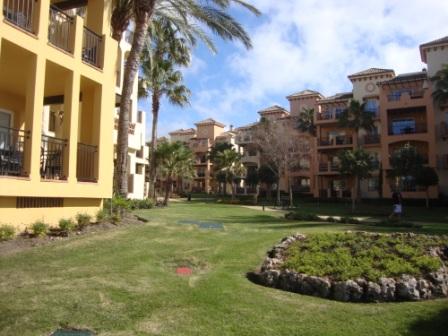
We eventually made our way to Marbella where we stayed in a Marriott Vacation Club timeshare exchange.


It fronted on the water and we took several long walks along the beach.


Most of the time we were basically alone, but on the last day, when the sun came out, there was quite a crowd. I don’t want to think about what it is like during the high season. Then again, Amy and I avoid the beaches in Italy during that period as well.

Northern Europeans flock to the Mediterranean coast at any time of year. That was nice since it meant that the hotel staff all spoke English, in part to deal with all of the timeshare owners from the UK. They also stocked a wide variety of foods. We had cheddar! You have no idea what it is like to live for a year with only Italian cheeses. There are only so many ways you can make pecorino and Italians have discovered all of them. We recently saw a book of 100 Italian cheeses and close to ¼ of them were variations of pecorino distinguished by being from differnt places!

The timeshare was a spacious, 2-bedroom affair which slept 6. We were only 2 so we bounced around in the emptiness. We had a nice view from our balcony.


A huge sitting room with TV (which had English channels!).


A very nice, fully equipped kitchen.


And last, but not least, a large bedroom with a very comfortable bed. You can just make out Amy’s hair on the pillow if you look closely enough. She wasn’t getting up for anything including a picture.


Sunday, March 10, 2013

Daylight Savings Time

Daylight Savings Time is an interesting invention. Countries near enough to the equator have no need for such an adjustment since the amount of daylight doesn’t vary much from season to season. Other places such as China don’t bother. After all, when the country is all in one inconvenient time zone anyway, what difference does it make if you shuffle the time by an hour? The heart of Europe and the US are similarly situated relative to the equator and have significant differences in daylight hours between the longest and shortest day of the year. Both have adopted daylight savings time. However, they make the jump at different times. This year, the US jumps ahead today, March 10. In Italy we won’t make the jump until March 31. Since we are normally 6 hours ahead of the US and you are jumping one hour toward us, there will only be a 5 hour time difference for the next three weeks.

In other news, we leave bright and early tomorrow morning for a ten day trip to Campania, Basilicata and Puglia. We will almost certainly have e-mail access, so don’t hesitate to contact us if you need to. However, blogging and uploading pictures will probably take a back seat to everything else which is going on. To compound the issue, we are taking off for an 8 day vacation to the Costa del Sol in southern Spain the day after we return, so it could be quite some time until I blog again. Rest assured however, I will fill you in on all the details once we get back to normal at the end of the month.

Saturday, March 9, 2013

Frankenankle

It has been a busy couple of weeks. We had a quarter end, a bicycle trip in Rome with students and a visit from the President of the organization. Couple that with an impending 10 day trip to Southern Italy and there hasn’t been much time to do anything beyond work and sleep.

Well, that isn’t exactly true. We did have time for Amy to sample the Italian medical system up close and personal last Sunday morning.

In Amy’s words, “My left foot rolled off the sidewalk this morning and I sprained my ankle while walking to the car to go to the hotsprings. Luckily, a posse of polizia heard my screams and called an ambulance. Warren followed the ambulance to the ER. A bike race was going through town, so the ambulance had to race the wrong way up one way streets. Very Italian and Formula 1-ish. Got to the ER and was transferred to one of the hospital's gurneys and left in the hall. Was occasionally wheeled to different areas of the hall. After about an hour, got 2 x-rays. About 1/2 hour after that was told no break, only sprain. Ice, elevation and ibuprofen. Didn't pay a cent. No English was spoken by any of the medical staff. Ankle is "caviglia". Sprained ankle is "distorsione alla caviglia". Hurt like hell when it happened. Now, there is no pain. Due to the 4 ibuprofen tablets I took?”


In fact, she was incapacitated for two days although never in any serious pain after the initial stumble. She held her classes in our living room and greatly enjoyed the attention, coffee and goodies that the students showered her with. We got her the world’s most expensive Ace bandage (18 euros which is around $25) so that she could wander around more easily. She has now entirely abandoned the crutches we found in the apartment and has switched to a foot brace she can wear in a close-toed shoe, assuming she can get her foot into a shoe without any pain. She is good-to-go for our trip next week.